

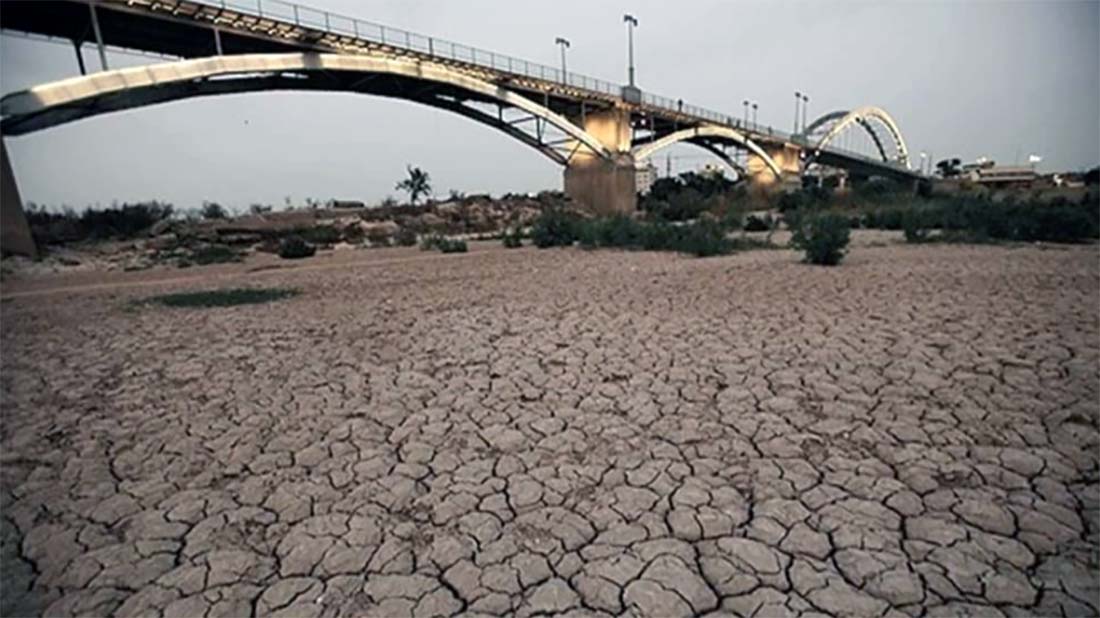
Karun River is now running dry
Why the Iranian regime continues executing its own people: Fear, control and survival
Just as the Karun River’s vital flow has been choked off, so too has the will of the Iranian people to endure the regime’s oppression.
Saturday 06/12/2025
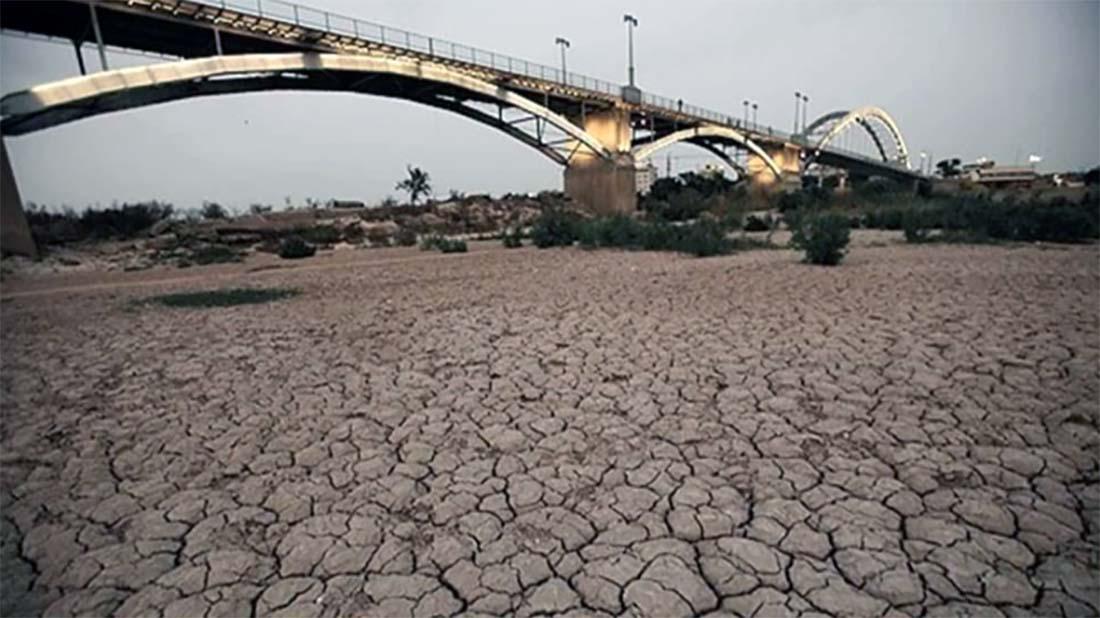
Karun River is now running dry
The image of the dried-up Karun River, the largest river in Iran and the Middle East, offers a stark metaphor for the current state of the country the current regime. Once a vital water source that nourished Iran’s agriculture and economy, the river now lies barren, its bed covered in dry, cracked soil. The cause? Illegal dam constructions by the regime and the diversion of water for private projects. What remains of the river is slowly turning to salt, symbolic of the broader environmental collapse that has gripped the country. This environmental catastrophe, driven by government negligence and corruption, mirrors the economic, political, and social decay that is pushing Iranian society toward the brink of collapse.
Just as the Karun River’s vital flow has been choked off, so too has the will of the Iranian people to endure the regime’s oppression. Across the country, protests are erupting daily—against economic mismanagement, political repression, environmental degradation, and the regime’s widespread corruption. On November 18, 2025, in Kohgiluyeh and Boyer Ahmad province, people gathered to protest the drying up of rivers that originated from Mount Dena and the illegal dams diverting its waters. Chanting, “We will fight, we will die, we will take back Dena,” the protesters symbolized a larger struggle: the fight to reclaim what has been taken from them by an authoritarian regime.
Iran’s economic crisis is profound. With rampant inflation, skyrocketing food prices, and widespread poverty, the basic necessities of life have become increasingly difficult to secure for ordinary citizens. From workers demanding unpaid wages to nurses and teachers protesting low salaries, from students protesting the universities low academic standards, to women fighting for their basic rights, Iranians are taking to the streets.
Maryam Rajavi, the president-elect of the National Council of Resistance of Iran, emphasized in her speech to the Free Iran Convention in Washington on November 14, “In Iranian society, the vast majority of women and young people who are either unemployed or have low incomes are the force of the uprising. A quarter to a third of the country’s population who now live in shantytowns or impoverished suburbs, have formed a powder keg. The Iranian labor force, which has become one of the cheapest labor forces in the world, is eager to disrupt this predatory order, and the people, whose lives have been shattered by hyperinflation, water shortages, and power outages, are eager to bring down the clerical regime.”
The Regime’s Deep Fear of Uprising
The ongoing protests, particularly those sparked by economic hardship and social injustice, pose a direct threat to the regime’s survival. In 2019, a fuel price hike led to massive protests that spread across the country, with the regime responding with extreme violence. Over 300 people were killed in a matter of days, and thousands more were arrested. The Iranian government is keenly aware that large-scale protests, like those in 2019 or the 2022 uprisings triggered by Mahsa Amini’s death can snowball into something far more dangerous for the regime.
Since the 2022 protests, the regime has increasingly turned to executions as a means of suppressing dissent. By executing people linked to protests or accused of challenging the regime, the authorities aim to send a chilling message: resistance is punishable by death.in May 2023 Iran executed three supporters of the People’s Mujahidin; their trials were described as involving torture, forced confessions and gross procedural flaws. At this very moment 17 other mojahedins are on the death row.
The Iranian regime’s use of the death penalty has become more frequent and more politically motivated in recent years. In 2023, Iran executed at least 853 people, marking the highest number of executions since 2015. By 2024, Iran accounted for nearly 64% of all known global executions. In 2025, the situation has only worsened, with an estimated 1,250 executions by September. These figures are not just statistics—they represent the brutal measures the regime is willing to take to maintain its grip on power.
The Rising Tide of Executions
In recent months, the pace of executions has accelerated. Between November 17 and 20, 2025, the regime executed 63 people—about one every 90 minutes. This surge in executions is part of a larger strategy to quell unrest and maintain control over a discontented population. As the regime faces growing pressure from protests, human rights organizations, and international bodies, it has responded with ever more violent repression.
But these executions have done little to address the root causes of the unrest. As long as the regime continues to prioritize its survival over the well-being of its people, the cycle of repression will continue.
The international community has repeatedly condemned Iran’s use of executions and its ongoing human rights violations. However, despite widespread condemnation and the imposition of sanctions, the regime remains defiant. For the government in Tehran, external pressure is a minor inconvenience compared to the threat of internal collapse. The regime’s priority is to maintain control, even if it means escalating its violent tactics.
As the international community looks on, it becomes increasingly clear that without a concerted effort to address both the political repression and the root causes of discontent, the cycle of violence in Iran will continue.
Fear, Control, and the Future of Iran
The Iranian regime’s ongoing use of executions is not just about punishing dissent; it is about survival. The regime’s leadership fears the growing discontent of its people—people who are increasingly willing to challenge the government, just as they are demanding that the lifeblood of their country, from rivers to rights, be restored. The drying up of the Karun River is a metaphor for the regime’s own destruction: as it continues to deprive its people of their rights and their basic needs, it is driving itself toward collapse.
On September 6, 2025, tens of thousands of Iranians from across Europe gathered at Atomium in Brussels on Mrs. Maryam Rajavi’s call to reject foreign war or appeasement. Addressing the crowd she said, “The answer to the Iranian crisis is the overthrow of the entire religious tyranny!
The people of Iran are more prepared than ever! Iranian society is in a volatile state, and the only solution is the Third Option, neither appeasement nor war, but regime change by the people and their organized resistance!”
Abdollah Pakatchi, political science graduate from Tehran University, with decades of expertise on politics and human rights challenges across Middle East and Iran.
The views and opinions expressed in this article are those of the author and do not necessarily reflect the position of Middle East Online
