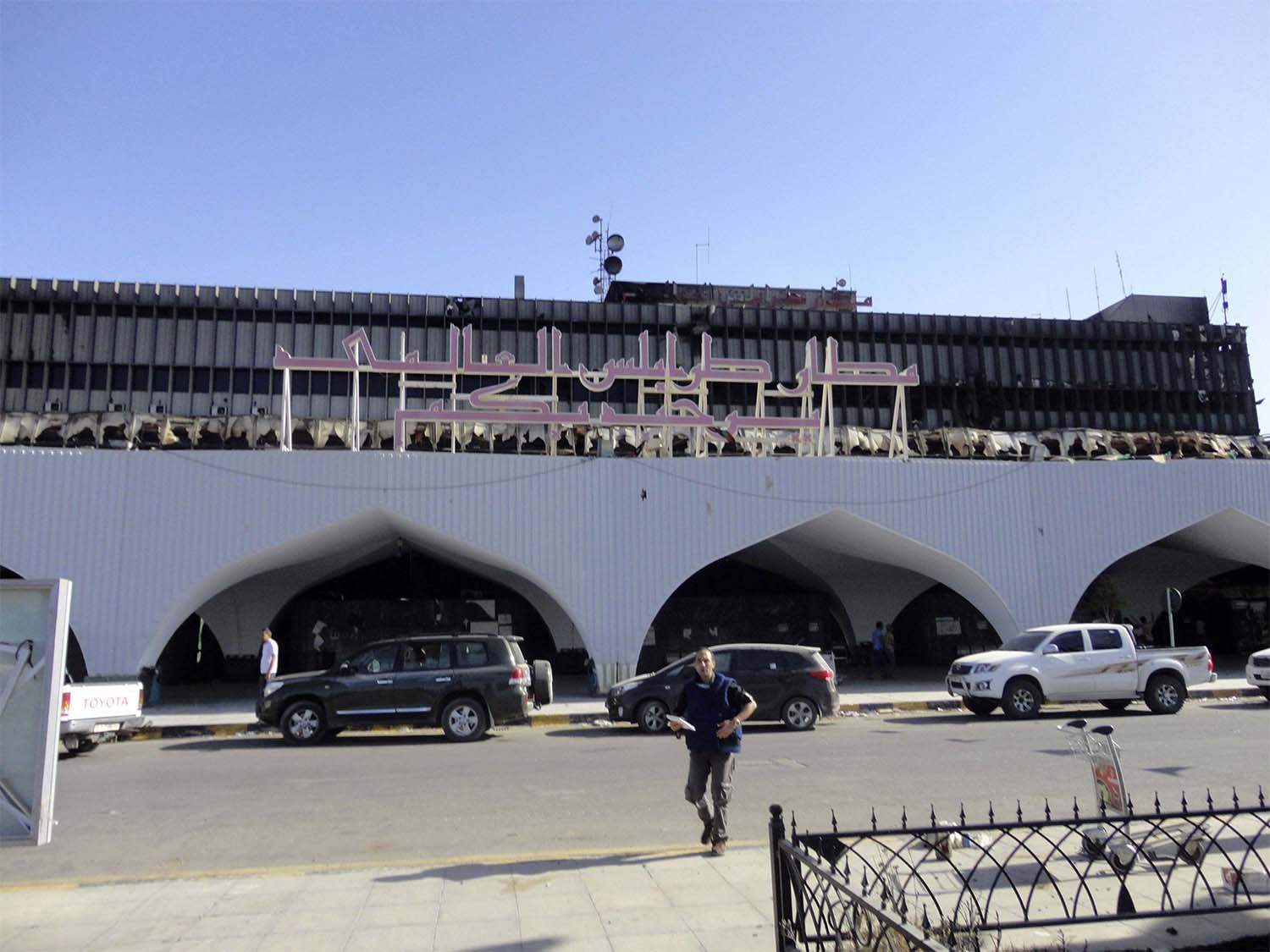
Tripoli airport
Libyan memories (2/3)
Nothing in Tripoli satisfied journalistic curiosity or the love of inquiry, especially if one arrived in Libya without an official invitation.
Thursday 29/01/2026
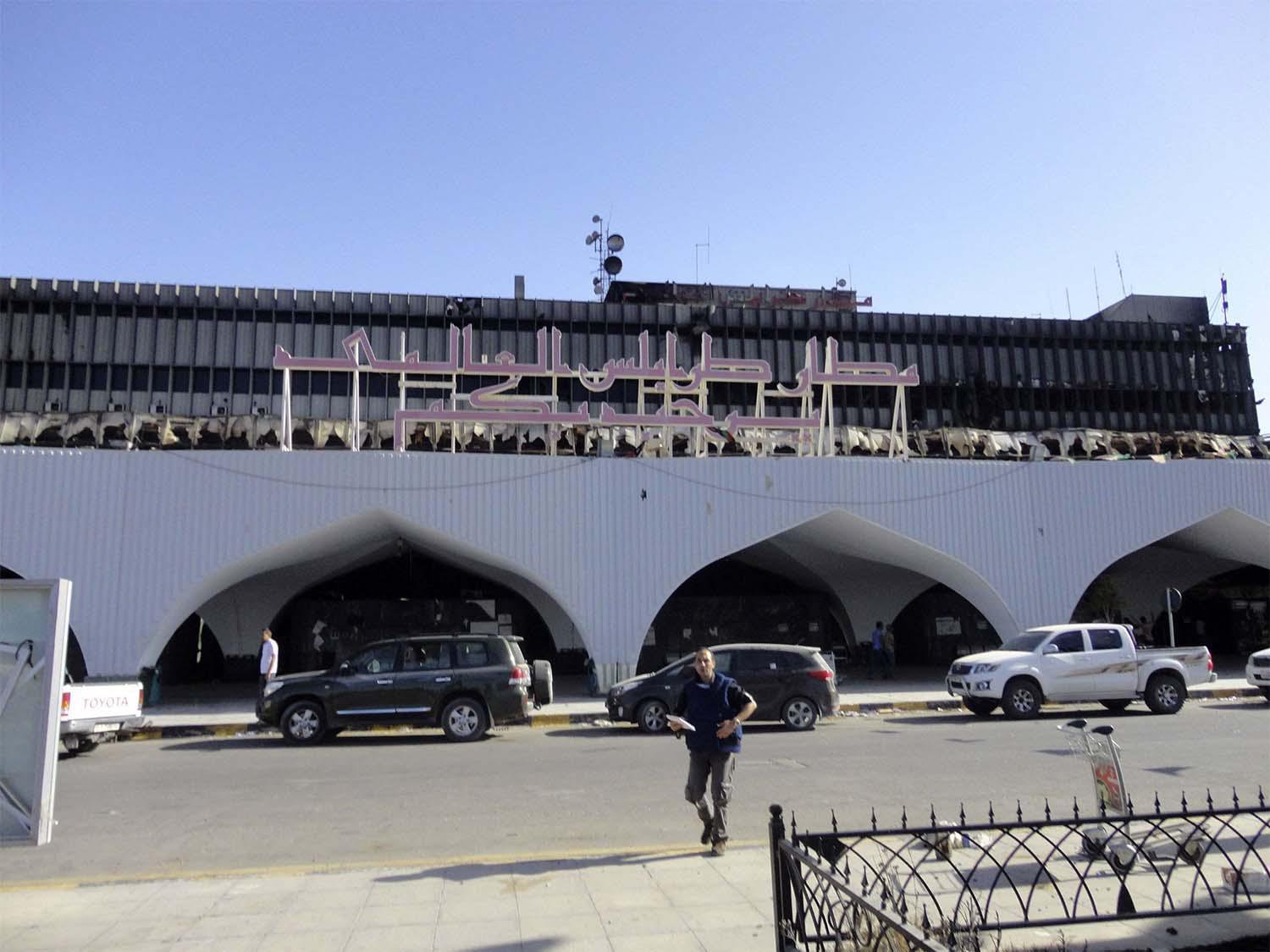
Tripoli airport
When the pilot of the Turkish Airlines flight from Istanbul announced our descent into Mitiga International Airport in Tripoli, a collection of destroyed civil and military aircraft came into view - some corroded, some rusted, scattered here and there.
My memory drifted back to December 1991, when I traveled to Libya to conduct journalistic investigations into this Maghreb country on the eve of its preparation for a harsh Western siege. At that time, however, my destination was Tripoli International Airport, which ceased operations after the chaos of the "Arab Spring" broke out in 2011. Back then, I was struck by a strange sensation that I was looking at the aftermath of a recent airstrike; it seemed the airport was nothing more than a haphazard museum of the history of Libyan aviation. It resembles the alternative "Mitiga" airport in that both now serve as graveyards for aircraft that have become mere scrap metal.
Life seemed normal in Tripoli after the United States, Britain, and France announced, on November 27, 1991, that they held Libya responsible for the bombing of the Pan Am flight over the Scottish town of Lockerbie in 1988. Slogans derived from the "Green Book" covered the city’s buildings. I asked a Libyan citizen about the general situation under those circumstances, and he replied with extreme brevity that failed to satisfy my curiosity, before politely and cautiously changing the subject to express his intense desire to visit Morocco.
Nothing in Tripoli satisfied journalistic curiosity or the love of inquiry, especially if one arrived in Libya without an official invitation. In such a situation, the only savior was the radio. One had to resort to the "Great Arab Homeland" station—the mouthpiece of the Revolutionary Committees—as it was the only source capable of providing a visiting journalist with a modicum of information that might, to some extent, help in completing a mission. One could also turn to the sole Libyan television channel if necessary, though it made not the slightest bit of difference.
Obtaining news in Tripoli in those days was like searching for a needle in a massive haystack. As for the Libyan media, it seemed preoccupied with the war in the Balkans, the deteriorating situation in Zaire, and the organization of a seminar on women in the Philippines under the supervision of the "International Center for Green Book Studies and Research." To know what was actually happening in Libya, foreign radio stations remained the only source, though most were subjected to heavy jamming.
I asked a senior media official about the reason for this media blackout and the scarcity of news regarding Western accusations and threats of military action if Libya did not hand over the suspects in the "Lockerbie" case. He replied that since the First of September Revolution in 1969, Libyans had grown accustomed to such campaigns; they had become ordinary to them and did not necessarily require a media clamor.
Among the most prominent paradoxes of Colonel Muammar Gaddafi's Libya was the country’s lack of a daily newspaper after Al-Fajr al-Jadid ceased publication. Most other newspapers were weekly, such as Al-Zahf al-Akhdar and Al-Jamahiriya, published by the Revolutionary Committees, while the rest were specialized journals.
There were other paradoxes I noticed at kiosks selling newspapers, tobacco, and postcards. I saw magazines like the American Newsweek and the French L’Express. I was also struck by the Libyans' insistence on calling the drink "Pepsi-Cola" by the name "Kawthar Cola" out of spite for imperialism—while simultaneously giving priority, despite all sensitivities, to American cigarettes, led by "Marlboro."
During my first visit to Tripoli, I had no choice but to wander, and wander again, hoping to catch fleeting glimpses of life on the Libyan street. This was the opposite of my most recent visit; although it lasted only two days, it was rich in terms of the meetings I held. I had the honor of greeting, on one occasion, the President of the Libyan Presidential Council, Mohamed al-Menfi, and the Prime Minister of the Government of National Unity, Abdul Hamid Dbeibeh. I sat at length with the Acting Minister of Foreign Affairs, Taher al-Baour—a man who makes you feel as though he has known you for decades, even if meeting him for the first time.
I was also delighted to be hosted by Moussa al-Koni, Vice President of the Presidential Council, at his generous home alongside a mutual Libyan friend. Additionally, I met a group of Libyan diplomats who had come to Tripoli from all corners of the globe to participate in the first forum for heads of diplomatic missions.
This is a different Tripoli with a different flavor. It brings to mind the words of the poet Abu al-Tayyib al-Mutanabbi:
The country's evil is a place where there is no friend
And the worst of what a man earns is that which brings him shame.
Hatim Betioui is a London-based journalist and Secretary General of the Assilah Forum Foundation.
The views and opinions expressed in this article are those of the author and do not necessarily reflect the position of Middle East Online