

INTERPOL will map in Marrakech the joint security steps for the next five years
Raisi: INTERPOL’s activities have gained exceptional recognition
INTERPOL President reaffirms his commitment to leading INTERPOL’s modernization based on integrity, innovation, and intensifying cross-border cooperation.
Monday 24/11/2025
INTERPOL will map in Marrakech the joint security steps for the next five years
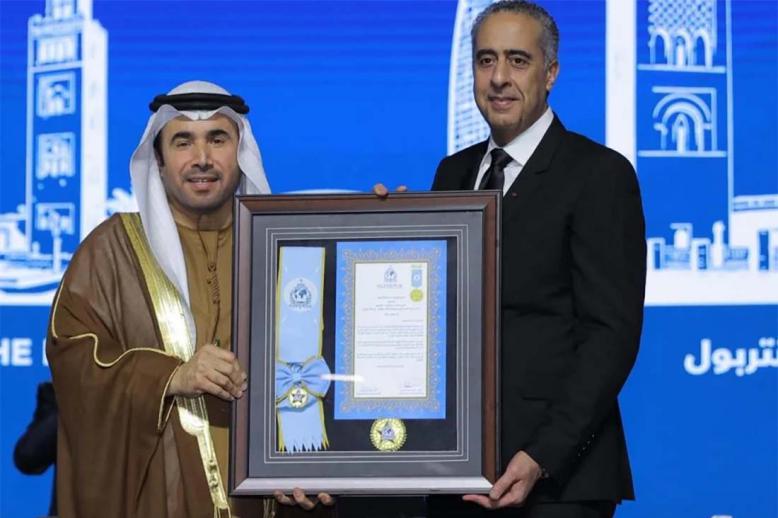
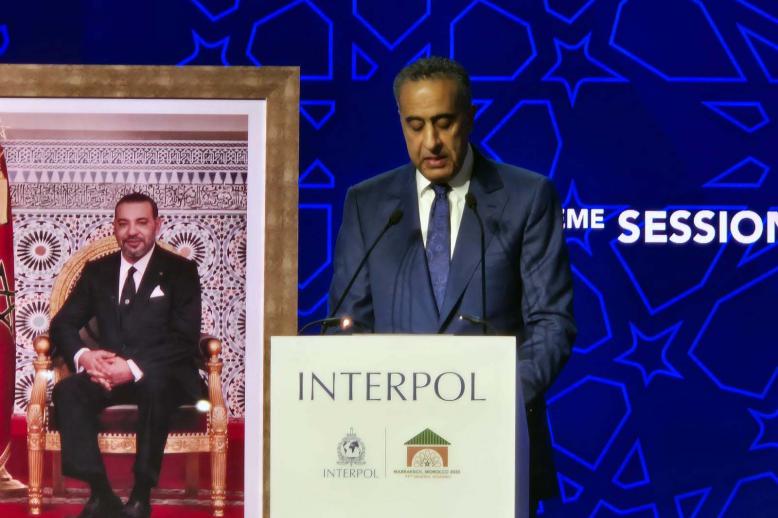
MARRAKECH - INTERPOL President Ahmed Nasser Al-Raisi said Monday the International Criminal Police Organisation’s General Assembly is an important platform supporting international cooperation in police and security work, enabling member states to shape the future of the world’s largest police organisation.
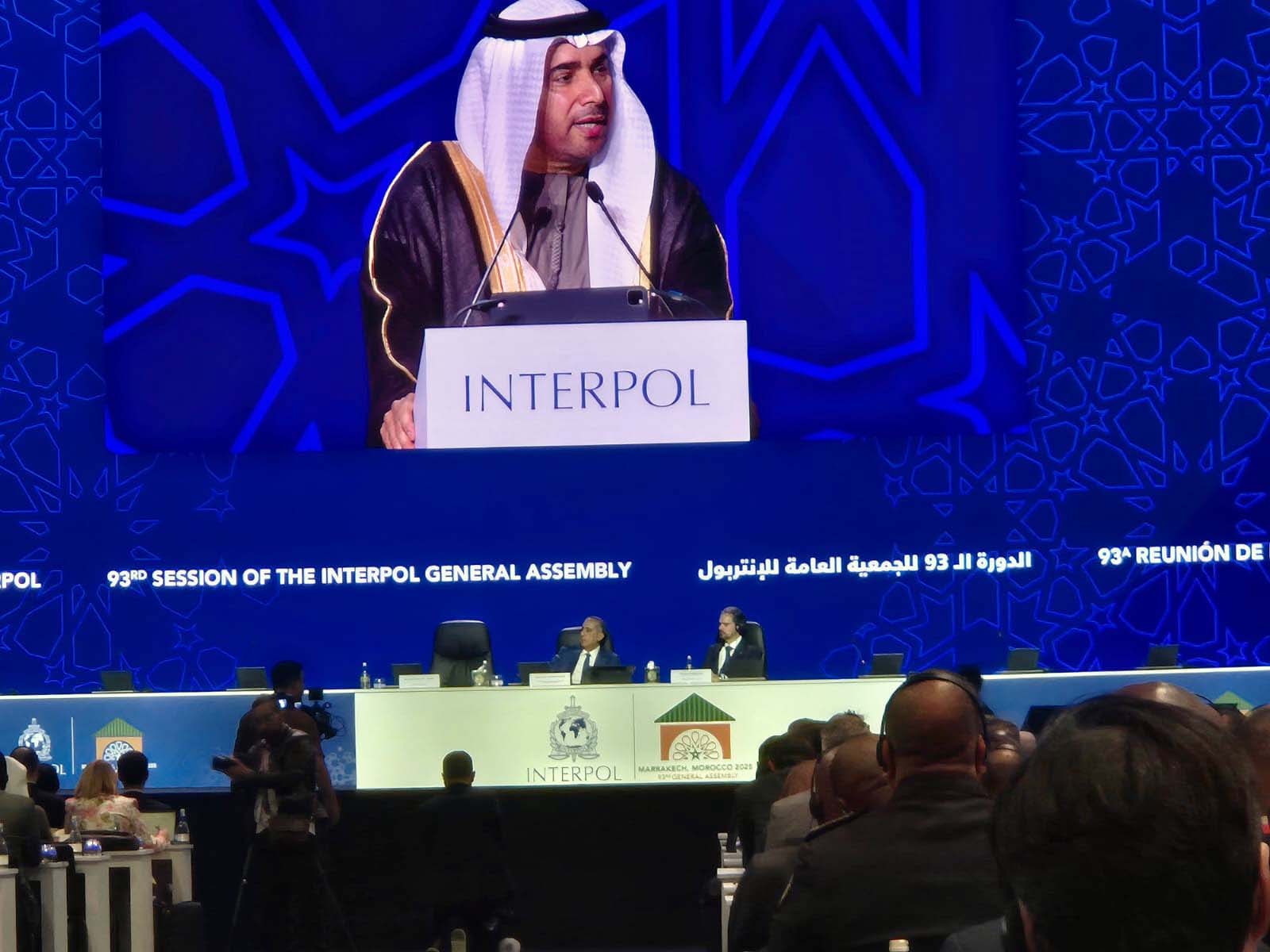
“Today we gather to review our achievements and to map the joint security steps for the next five years. In Istanbul in 2021, I reaffirmed my commitment to leading INTERPOL’s modernization based on integrity, innovation, and intensifying cross-border cooperation, with the involvement of member states, which then numbered 195 and now 196, in decision-making,” said Raisi during a speech on the opening day of the 93rd INTERPOL General Assembly.
Since assuming his role as President, Raisi vowed to modernize INTERPOL’s operations, adopt the latest technologies, enhance information exchange mechanisms, and build trust among member states, alongside embedding diversity and inclusion principles to ensure that every commitment they make yields real progress and tangible results.
“Over the past four years, member states have joined forces, successfully managing and coordinating more than 200 cross-border operations worldwide. These efforts resulted in the seizure of drugs, recovery of stolen vehicles estimated at over $17.3 billion, and issuance of notices relating to looted assets valued at $19 billion. These are not mere statistics but represent lives protected and criminal networks disrupted,” Raisi told the gathering. "INTERPOL’s activities have gained exceptional recognition by uniting law enforcement agencies globally."
Operations like Thunder, HAECHI, Soteria, Binghe, and Serengeti have become models of international police cooperation, leading to thousands of arrests and safeguarding vulnerable populations worldwide.
“Every step forward reflects the level of trust member states place in this organisation. Every life saved and crime fought is a shared achievement,” he said, adding that the significant advancement in information exchange mechanisms has been pivotal in INTERPOL’s operational success.
This year the international police organisation celebrated the tenth anniversary of the INTERPOL Global Innovation Center in Singapore, a cornerstone of its leadership in cyber and digital innovation worldwide.
Raisi said that the Center has, over the past decade, has bolstered INTERPOL’s ability to support law enforcement agencies in combating complex crime threats and preparing for future challenges.
“Since my election as President in 2021, research and investigations through databases have doubled, recording 7.8 billion transactions—an increase nearing 100%,” said the head of INTERPOL.
INTERPOL I-CORE, a unified digital platform simplifying internal procedures and facilitating police cooperation and information exchange among member countries, was launched in October 2019.
This initiative is a ten-year project intended to completely renew INTERPOL's information technology and infrastructure to better address modern transnational crime. The first phase of its implementation is scheduled for completion in 2025.
Raisi said that, for the first time, General Assembly meetings are fully digital, with all materials available on a dedicated app and secure website, enhancing efficiency and sustainability.
He said he was confident that future assemblies will be even more effective, leveraging advanced technologies and AI to boost international security efforts.
“We have also improved the efficiency of the oversight committee significantly, reducing registration processes by approximately 880 days through an AI-powered smart system for processing requests, said Raisi, adding that these procedures are now simpler and more transparent, reflecting our commitment to data protection and operational excellence.
The INTERPOL chief said that the global police communication network i-24/7 remains foundational to security cooperation, supplemented by advanced digital tools including immersive training environments like Metaverse and AI-powered analytic assistants such as EVA.
Over 73,000 officers worldwide have trained since 2023 through both in-person and virtual courses to develop skills and enhance readiness.
At his first address as President, Raisi pledged that INTERPOL would be a truly global organisation reflecting the diversity of the world it serves.
“At the time, the organisation had 1,000 staff from 115 countries, with about one-third of member states unrepresented, negatively impacting credibility and operational effectiveness. Today, this has transformed into a proud achievement, expanding geographic diversity to 141 countries in the Secretariat, a 28% increase over four years,” said Raisi.
Representation grew by 46% in Africa, 43% in the Americas, 34% in Asia and Oceania, and 12% in Europe.
“For the first time, every region of the world is represented in INTERPOL’s Secretariat, making the organisation a unified voice for all 196 member states,” he said.
Raisi concluded his speech b saluting the police officers worldwide, who stand on the front lines, face risks daily, and provide perfect examples of dedication and courage.