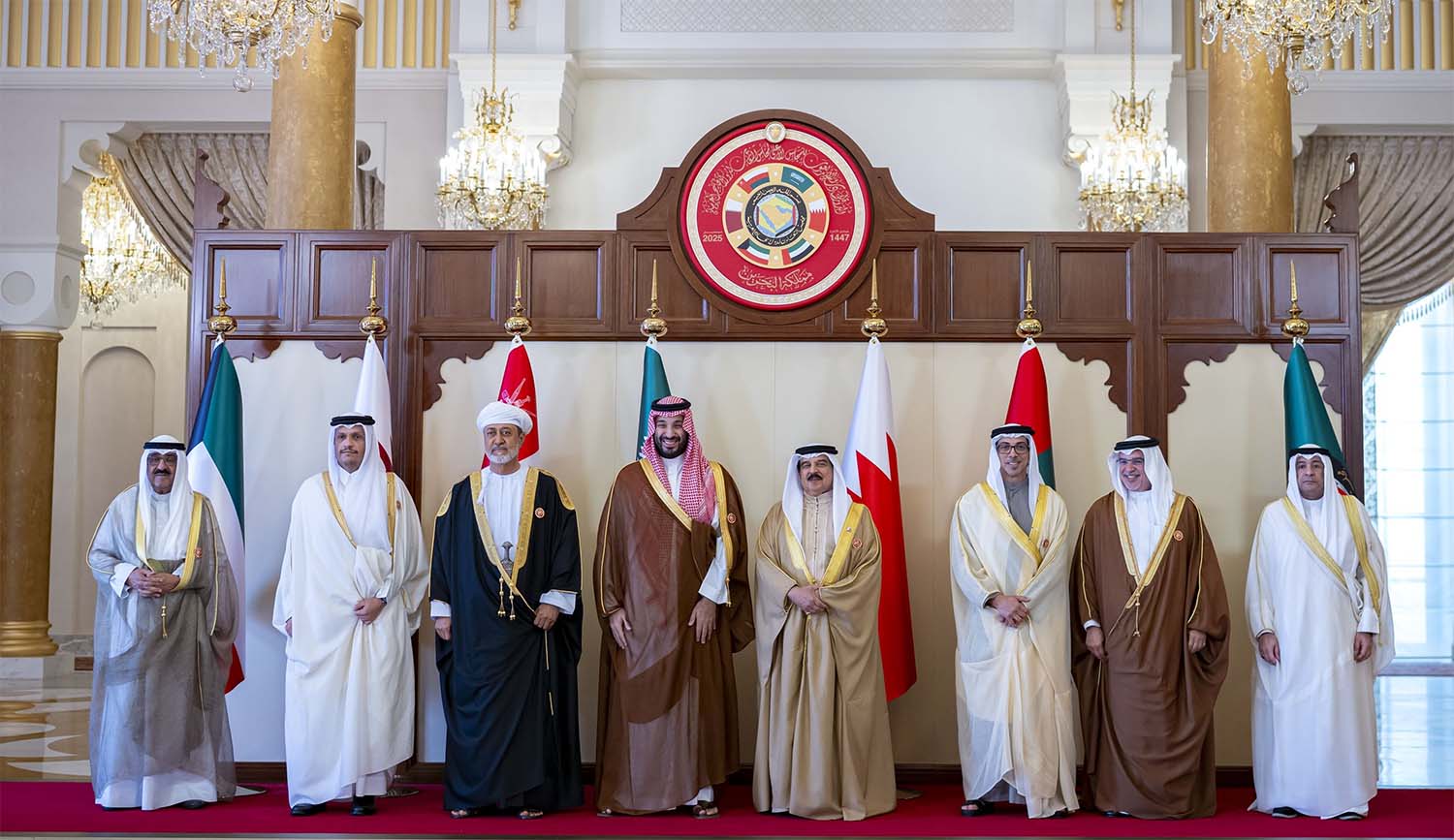
King Hamad reminded everyone that the GCC’s progress draws its strength from bonds of brotherhood and kinship
The Manama Summit: Gulf realism drawing the features of the future
The GCC remains the Arab framework most capable of resilience and overcoming challenges, thanks to its realism, moderation, and shared vision of a future based on security and economic integration.
Saturday 13/12/2025
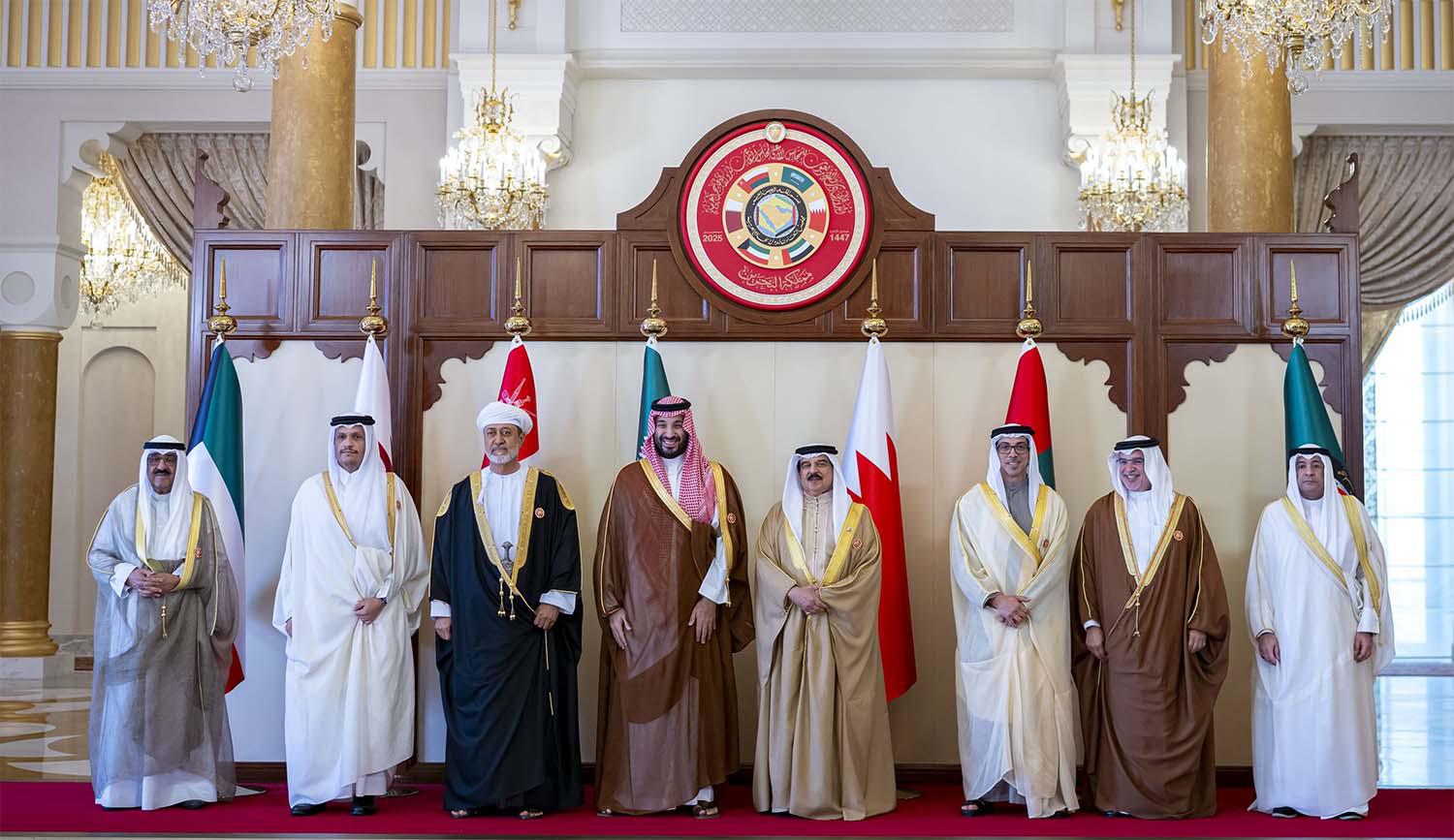
King Hamad reminded everyone that the GCC’s progress draws its strength from bonds of brotherhood and kinship
Manama hosted, on 16 May 2024 and again on 3 December of this year, two summits: the 33rd Arab Summit and the 46th Summit of the Gulf Cooperation Council (GCC). A common thread links the two events: realism, moderation, and a commitment to adopting unified decisions that reflect a spirit of responsibility and a bet on the future.
Although the Manama GCC summit – the eighth hosted by Bahrain since the Council’s establishment in 1981 – was held in a delicate context related to regional security, especially after the Israeli attacks on Qatar, the fact that Bahrain’s King Hamad bin Isa Al Khalifa raised, in his opening speech, the issue of protecting Gulf security and described it as a “golden rule” for the Council’s work, based on a unity of fate, respect for sovereignty, good‑neighbourly relations, and non‑interference in internal affairs, formed the core of what preoccupies decision‑makers in the region.
It was notable that King Hamad reminded everyone that the GCC’s progress draws its strength from bonds of brotherhood and kinship, and that it was founded on the principles of integration and unification, which enhance its standing as an effective regional power. It was therefore not surprising that the summit’s final communiqué expressed a clear Gulf desire to combine the strengthening of joint security with expanding prospects for economic integration, based on its 162 clauses that outlined the contours of an advanced future vision.
The Israeli airstrike that targeted Doha showed the Gulf states’ need to activate the joint defense agreement more than ever before, and to update some of its mechanisms in line with the scale of current challenges, and that “no one scratches your skin like your own fingernail” – in other words, self‑reliance is essential.
In this context, Abdullah Bishara, the first Secretary‑General of the Council, expressed to journalists Issa Al‑Shaiji and Rashid Al‑Hammr of the newspaper “Al‑Ayam” his satisfaction with the level of security and political coordination within the GCC, considering that its voice is heard internationally and carries real weight. However, he wished that economic achievements were broader and more directly reflected in the life of the Gulf citizen.
Regardless of the detailed outcomes of the Gulf summit, the mere fact of its convening remains a major gain, given that the GCC is the only active Arab regional bloc whose dynamism is still intact, unlike the Arab Maghreb Union, which suffers from structural paralysis – or rather a state of clinical death – because of the Moroccan‑Algerian dispute over the Moroccan Sahara. And if Algeria tried months ago to establish a tripartite bloc including Tunisia and Libya, that project was stillborn for several reasons, among them that it contradicts the nature of the region and aims to isolate Morocco, in addition to Mauritania’s refusal to join a Maghreb grouping that does not include the North African Kingdom.
The same applies to the Arab Cooperation Council founded in 1989, which brought together Iraq, Jordan, Egypt, and Yemen, but quickly collapsed a few months later following Iraq’s invasion of Kuwait in 1990. It also applies to the “Steadfastness and Confrontation Front,” formed after the late Egyptian President Anwar Sadat’s visit to Jerusalem in 1977 and comprising Syria, Libya, Algeria, Iraq, South Yemen, and the Palestine Liberation Organization, before disintegrating in the mid‑1980s due to Arab divisions.
Despite all those experiences that faltered or collapsed, the GCC has remained a beacon of hope and succeeded in building a promising development model based on stability and prosperity. This is what King Hamad pointed to in his speech when he praised what has been achieved in the fields of economic unity and Gulf citizenship, stressing member states’ aspiration to complete the customs union project, strengthen the common Gulf market, and expand partnerships in food and water security, the digital economy, and renewable energy.
The summit’s final communiqué came loaded with messages affirming that Gulf security is indivisible, and that any threat to one of its states affects all, based on the GCC’s founding charter and the joint defense agreement. This coincided with advanced integration steps such as creating a unified Gulf civil aviation authority and adopting a common industrial platform, reflecting a desire to institutionalize and expand economic cooperation.
The Manama summit also stressed commitment to King Salman bin Abdulaziz’s vision for strengthening joint Gulf action, completing the defense and security frameworks, unifying political positions, and building broader international partnerships, while tasking the competent bodies with setting a timetable for implementation. It also reaffirmed continued consultations on moving from the stage of “cooperation” to that of “union.”
In any case, the GCC remains the Arab framework most capable of resilience and overcoming challenges, thanks to its realism, moderation, and shared vision of a future based on security and economic integration, in a way that further consolidates stability and prosperity in the region.
Hatim Betioui is a London-based journalist and Secretary General of the Assilah Forum Foundation.
The views and opinions expressed in this article are those of the author and do not necessarily reflect the position of Middle East Online